- February 13, 2026
- Courses,Design,Mini Golf,
- Tracey
Last Updated: June 2026
Understanding mini golf’s evolution helps explain why it’s now considered a serious commercial asset rather than a novelty attraction.
Mini golf in Australia did not grow by accident. Its evolution mirrors broader changes in how Australians spend leisure time, how venues compete, and how recreational spaces generate revenue.
How has mini golf grown in Australia?
- Early miniature golf in Australia was simple:
- Small sand or turf layouts
- Basic obstacles
- A strong focus on casual recreation
- By the 70s, families wanted creativity, with varied play.
- By the 90s, courses became part of larger entertainment centres.
- Today, courses are no longer being built simply as add-ons – they are being designed as revenue engines.
How did it go from backyard putting greens to commercial precincts?
Mini golf was never static.
As suburbs expanded and family entertainment became more structured in the 1960s and 70s, courses expanded. Artificial turf allowed for durability. Structured obstacles introduced play variety. The experience became less about practice and more about participation.
By the 1980s and 90s, mini golf had shifted again. Indoor centres emerged. Retail and entertainment precincts began integrating courses as part of larger offerings. Mini golf moved closer to hospitality to generate revenue.
When did mini golf shift from novelty to strategy?
The biggest change in Australian mini golf has occurred in the last 15 years.
Instead of flat novelty layouts, many modern builds focus on:
- Contoured putting surfaces
- Realistic golf cup placement
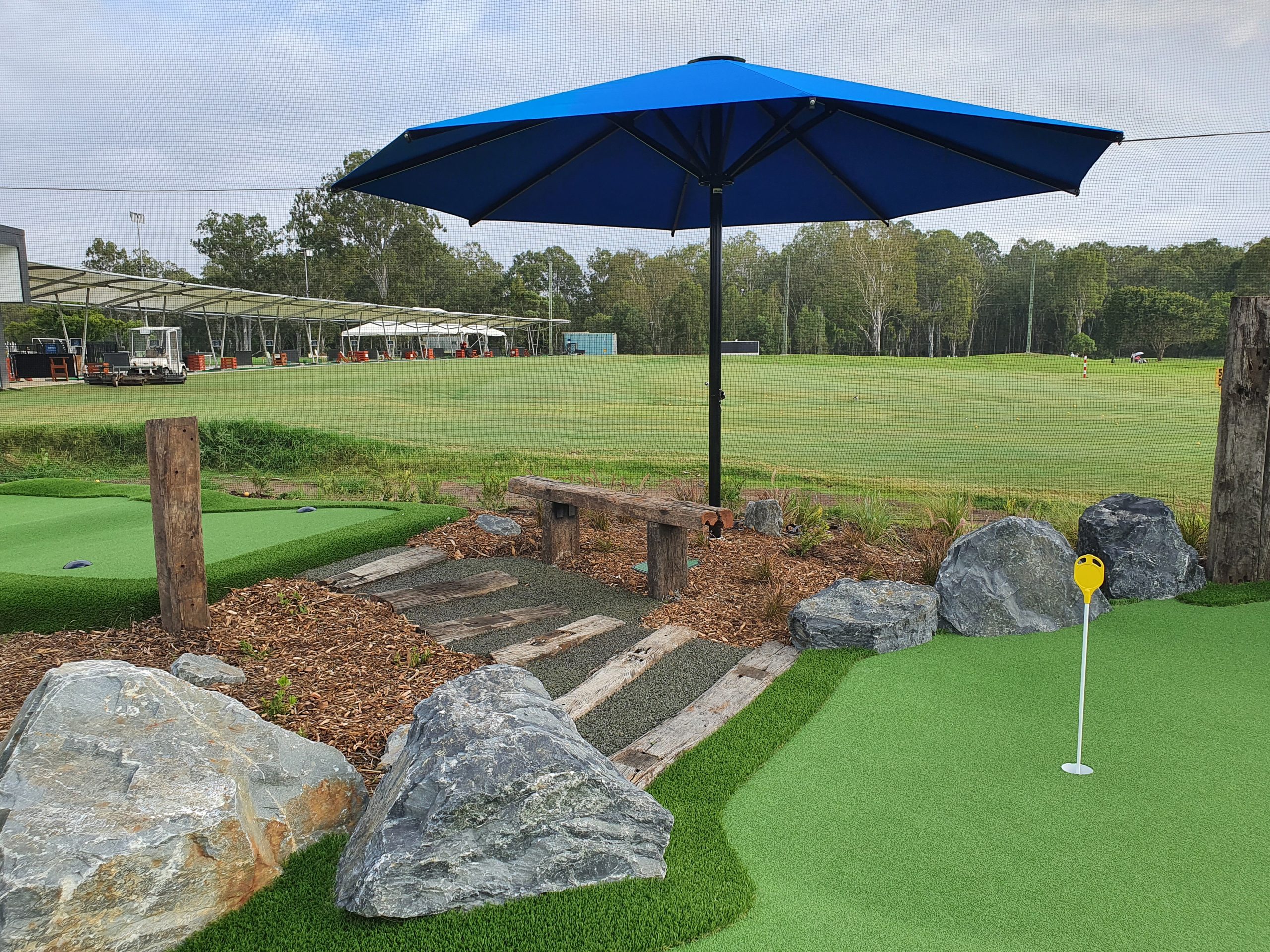
- Integrated landscaping
- Durable construction
- High-quality drainage systems
- Visual appeal suitable for social media
The objective is no longer just to entertain children. It is to attract families, corporate groups, young adults, and golf club members in equal measure.
Mini golf has evolved from pastime to business model.
Why does Mini Golf evolution matter for venues in 2026?
Today’s venue operators compete for discretionary spending. Entertainment dollars are not limited to traditional golf clubs or recreation centres. They compete with dining precincts, cinemas, competitive socialising venues, and experience-based attractions.
Mini golf succeeds in this environment because it is:
- Accessible to all ages
- Social and group-friendly
- Compact in footprint
- Relatively low maintenance
- Capable of driving ancillary spend
That evolution did not happen overnight. It reflects decades of adaptation.
What’s the Australian difference in mini golf?
In Australia, mini golf has developed a distinct identity.
While novelty putt putt remains popular, there has been growing demand for contoured, landscaped mini golf that mirrors real golf in miniature form.
This approach appeals to traditional golfers while remaining welcoming to first-time players.
It also aligns more closely with golf clubs and councils seeking a premium, integrated experience rather than a temporary attraction.
Where Mini Golf Creations fits in
Mini Golf Creations emerged during this modern phase of mini golf development.
With a foundation in golf course turf management and landscaping, the business evolved from installing backyard putting greens to delivering large-scale commercial mini golf courses across Australia.
The focus has always been on building courses that feel intentional, durable and commercially viable.
Modern Australian mini golf requires:
- Technical construction knowledge
- Drainage and surface expertise
- Creative theming without gimmicks
- Long-term performance planning
That is where experience matters.
Learn more about our construction and design approach here:
https://minigolfcreations.com/construction/our-design-and-process/
What’s the next chapter of mini golf in Australia?
Mini golf continues to adapt.
Current trends shaping the industry include:
- Sustainable materials and water-efficient landscaping
- Integration into hospitality precincts
- Social media-driven visual design
- Hybrid spaces combining food, drink and play
- Night-time activation with lighting and programming
The game may be small in scale, but its commercial and cultural impact continues to grow.
Mini golf in Australia has moved far beyond its early sand-based layouts. It now occupies a serious place in the leisure economy.
For venues considering a build or upgrade, understanding that evolution helps clarify one thing:
Mini golf is not just history. It is an opportunity.
Frequently Asked Questions
1. How has mini golf changed in Australia over the years?
Mini golf started as simple backyard or sand-based putting greens focused on casual fun. From the 1960s–70s, artificial turf and creative obstacles made it more durable and engaging. By the 1980s–90s, indoor centres and precinct integrations turned it into part of hospitality. In the last 15 years, it’s become a strategic revenue driver with contoured surfaces, landscaping, social-media appeal, and broad audience targeting—evolving from novelty to a serious business model.
2. What makes Australian mini golf different from other countries?
Australia has moved beyond classic novelty “putt-putt” toward contoured, landscaped courses that mimic real golf in miniature. This appeals to serious golfers and beginners alike, and integrates well with golf clubs, councils, and premium venues seeking a high-quality, long-term attraction rather than a temporary gimmick. The focus is on durability, realistic play, and commercial viability.
3. What are the biggest mini golf trends in Australia for 2026?
Current and upcoming trends include sustainable materials and water-efficient landscaping, integration into hospitality and dining precincts, designs optimised for social media photos, hybrid food-drink-play spaces, and night-time activation with creative lighting. These make mini golf more immersive, inclusive, and profitable as part of the broader leisure and entertainment economy.
Contact Mini Golf Creations for more information
Find out more about our mini golf construction, mini golf course design, mini golf turf, mini golf renovation, pop up mini golf, and our mini golf revenue calculator.
